


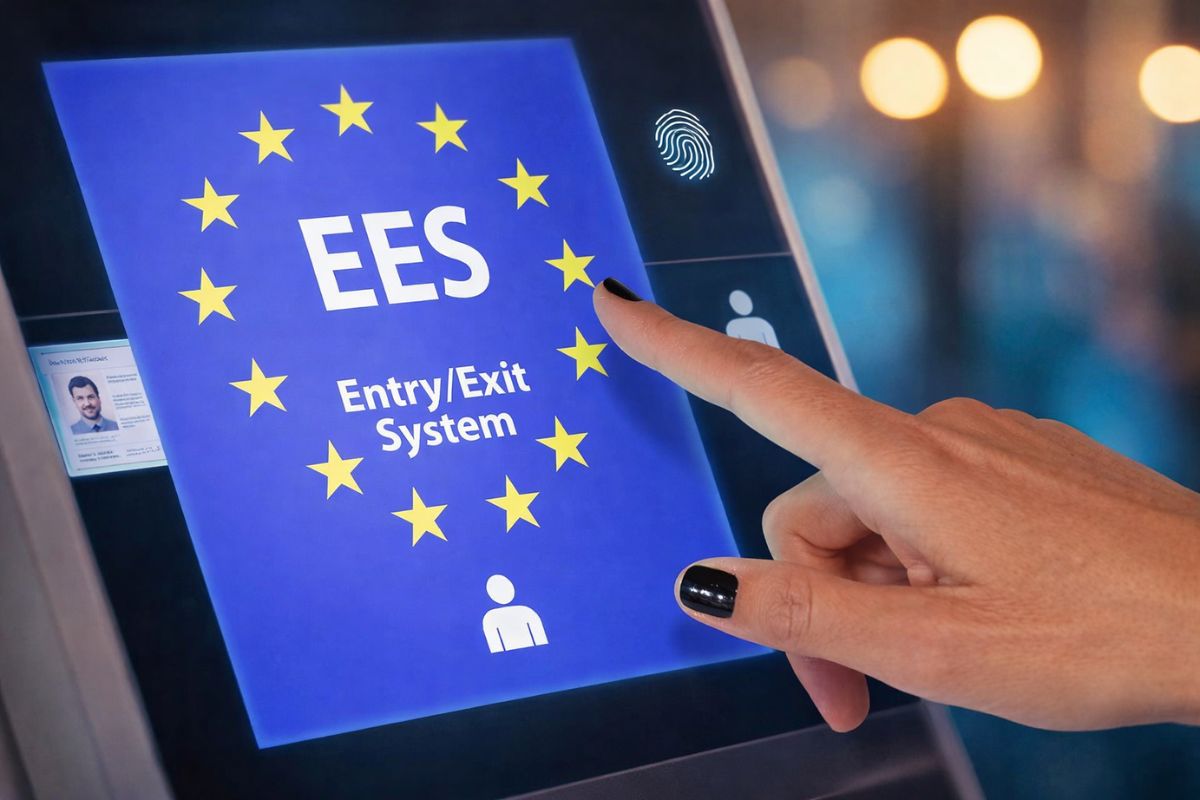
The Entry/Exit System (EES) of the EU is set to become completely operational by April 2026, transitioning from traditional passport stamps to digital tracking, along with biometric data such as fingerprints and facial recognition. Here’s what travellers need to understand.
The Entry/Exit System (EES) introduced by the European Union is progressively altering the way travellers navigate their entries and exits from Europe. Launched on October 12, 2025, this system is being implemented in phases across 29 nations within Europe. Starting from April 10, 2026, it will reach full functionality.
Put simply, the practice of stamping passports will be replaced by electronic records. Rather than manual stamps, border control will now save entry and exit details digitally, incorporating biometric data like fingerprints and facial photographs.
This change represents a significant shift in border management for those intending to stay briefly in Europe.
What Is the Entry/Exit System (EES)?
The Entry/Exit System (EES) functions as a digital mechanism for border control employed by nations within the Schengen Area. It tracks when non-EU citizens enter or exit Europe for short-term stays.
The purpose is straightforward: enhance security, diminish identity fraud, and accelerate border inspections.
Authorities gather the following data under EES:
- Facial image
- Fingerprints
- Passport information
- Entry and exit timestamps
- Logs of denied entries, if applicable
This data is securely stored and reviewed every time a traveller crosses a border.
Initial Outcomes Indicate Significant Impact on Border Security
Since the system was initiated in October 2025, authorities have documented over 45 million border crossings. This information has aided officials in recognizing irregular travel patterns and enhancing border checks.
Notable early statistics comprise:
- More than 45 million crossings documented
- Over 24,000 travellers denied entry
- Approximately 600 individuals identified as security threats
Some individuals faced refusal of entry due to missing travel documents, ambiguous reasons for their visit, or suspected fraudulent documentation.
In multiple instances, the system successfully detected individuals using multiple identities. For instance, border agents in Romania found a traveller operating under two different names across separate documents. The records indicated that this individual had previously been denied entry three times by various Schengen nations.
Identifying such cases would be challenging without biometric matching.
The Importance of EES for Travellers
For many travellers, the procedure is set to become more seamless over time. Automated systems can lessen manual checks and reduce wait times at busy airports.
Simultaneously, the system bolsters border security by ensuring compliance with the rules surrounding short-term visits in Europe.
Moreover, the EES will collaborate closely with the forthcoming ETIAS Travel Authorisation, which will be applicable to travellers exempt from visa requirements in the near future.
Understanding How the Entry/Exit System (EES) Operates
Here’s a clear step-by-step breakdown of how the EU Entry/Exit System captures traveller data digitally, transitioning from passport stamps to biometric border inspections.
Arrival at the Border: Upon arriving in a participating European nation, your passport will be scanned.
Collection of Biometric Data: Your fingerprints and facial photograph will be captured for identification purposes.
Digital Data Storage: Your entry will be recorded electronically, eliminating the need for stamping your passport.
Checked Upon Departure: When exiting Europe, the system automatically logs your exit.
Future Travels Made Simpler: Your information will already be in the system, facilitating quicker border checks during future travels.
Implications for the Future
The Entry/Exit System is a component of Europe’s extensive strategy to modernize border management through technological advancements. For travellers, this results in fewer passport stamps but an increase in digital verifications.
If you are planning a trip to Europe commencing April 2026, anticipate biometric checks to be a regular aspect of your journey.
Although it may feel unfamiliar initially, the overarching goal remains evident: streamlined borders, enhanced security, and more precise travel documentation.
Fonte: Travelo Biz
