


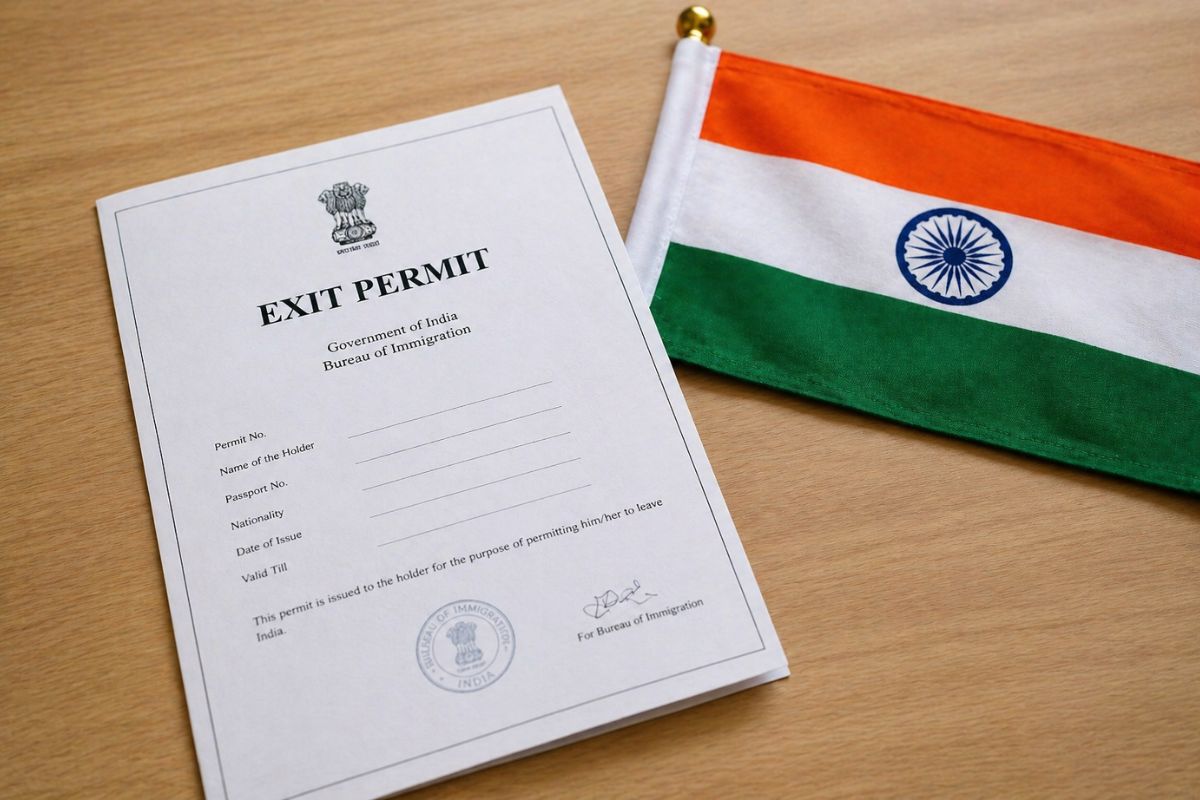
Understanding the exit permit for India: who requires it, necessary documents, and a detailed eFRRO application guide for leaving the country smoothly.
If you’re considering departing India but your visa has lapsed, changed, or you’ve encountered a problem, you might be required to obtain an exit permit. While it may sound complex, it often surprises many travelers.
This guide offers a straightforward overview to clarify what an exit permit entails, who needs one, and how to acquire it.
What Is an Exit Permit?
An exit permit is an authorized document provided by India’s immigration officials. It permits a foreign citizen to depart legally from the country when their visa conditions are not in order.
In plain language, should your visa become invalid or not align with your current circumstances, you will need this permit prior to boarding your flight.
Who Requires an Exit Permit?
Not everyone traveling needs one. However, you will typically require an exit permit if:
- Your visa has lapsed, and you have overstayed
- Your visa was revoked or cancelled
- You switched visa types but failed to update your information correctly
- You had a long-term visa and are now exiting permanently
- You misplaced your passport and obtained a new one
- You are entangled in any outstanding immigration or legal issue
If the details on your visa are accurate and in place, you can exit India normally without taking this extra step.
Importance of This Process
Airlines and immigration personnel will review your documentation prior to departure. If your visa condition is ambiguous, you could face being held at the airport. An exit permit preemptively addresses that concern. It verifies that you are permitted to leave, even if your visa status is less than ideal.
Steps to Obtain an Exit Permit in India
The entire process is now available online via the eFRRO portal. Here’s a breakdown of how to proceed:
Step 1: Visit the eFRRO Site
Access the official eFRRO website and confirm you are on the legitimate government page before beginning your application.
Step 2: Register or Sign In
Set up a new account using your email address and phone number, or securely sign in if you’ve previously registered.
Step 3: Select ‘Exit Permit’
Once logged in, go to the services menu and choose the Exit Permit option to initiate your application.
Step 4: Complete the Application Form
Enter your personal, passport, and visa information accurately, and select the appropriate FRRO office based on where you are located in India.
Step 5: Upload Required Documents
Attach clear scanned copies of your passport, visa, recent photograph, and any additional documents as specified on the portal.
Step 6: Submit and Pay (If Necessary)
Finalize your application submission, then look for any payment prompts and complete the necessary fee online using the available payment methods.
Step 7: Await Approval
Keep track of your application status online; upon approval, download the exit permit from the portal or receive it via email.
Documents Required
Gather these items before you apply:
- Current and any old passports (if relevant)
- Copy of your visa
- Recent passport-sized photograph
- Form III (if applicable)
- A brief letter of request detailing your situation
- Additional documents pertinent to your situation
Ensure all files are clearly legible. Inadequate uploads can slow down your application process.
Timeframe for Processing
Processing durations may differ. Some applications may be completed within a few days, whereas others may take longer based on your circumstances. If your travel date is approaching, submit your application early to avoid last-minute challenges.
Essential Tips Before Submitting
- Verify your information before submission
- Select the correct FRRO jurisdiction
- Retain copies of all documents
- Check your email for notifications or inquiries
- Avoid leaving it until the last minute
Conclusion
If your visa conditions aren’t ideal, remain calm. This procedure was designed to assist you in leaving the country legally and without difficulties.
For travelers, it’s one of those processes you hope to avoid. However, if you find yourself in need, you are now equipped with the knowledge on how to proceed.

Manish Khandelwal
Articles: 8119
Fonte: Travelo Biz
