


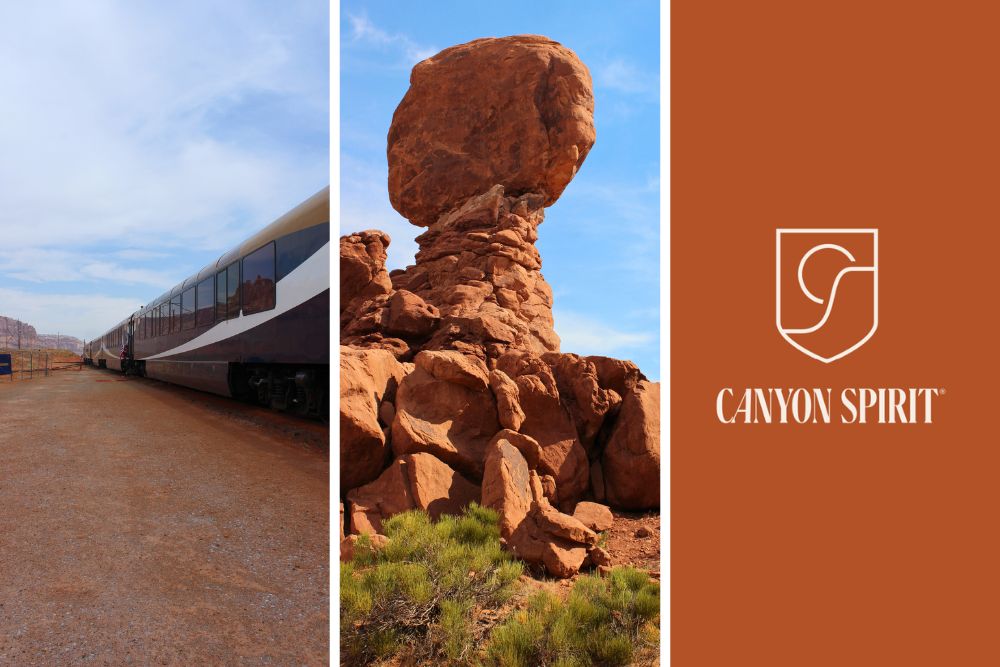
This spring, the premium rail service Canyon Spirit will launch in the Southwest United States, providing a fresh way for adventurers to traverse the rugged terrains adjacent to the Colorado River.
Canyon Spirit elevates rail travel in America by fusing comfort with an adventurous spirit. Previously run by Rocky Mountaineer, the extended Rockies to the Red Rocks three-day route promises an unforgettable journey through some of the most breathtaking natural environments the U.S. proudly presents.
During the day, travelers will be captivated by the region’s striking vistas, enjoying the surreal red cliffs and serene river views, all under the guidance of an experienced host. When night falls, guests disembark to discover the quaint towns of Moab and Glenwood Springs, ultimately retreating to charming boutique accommodations for rest.
Travel Market Report spoke with Jonathan Hope, the managing director of sales at Canyon Spirit, to gain insight into the offerings and what travel advisors should understand to effectively promote and sell the brand.
What Is Canyon Spirit?
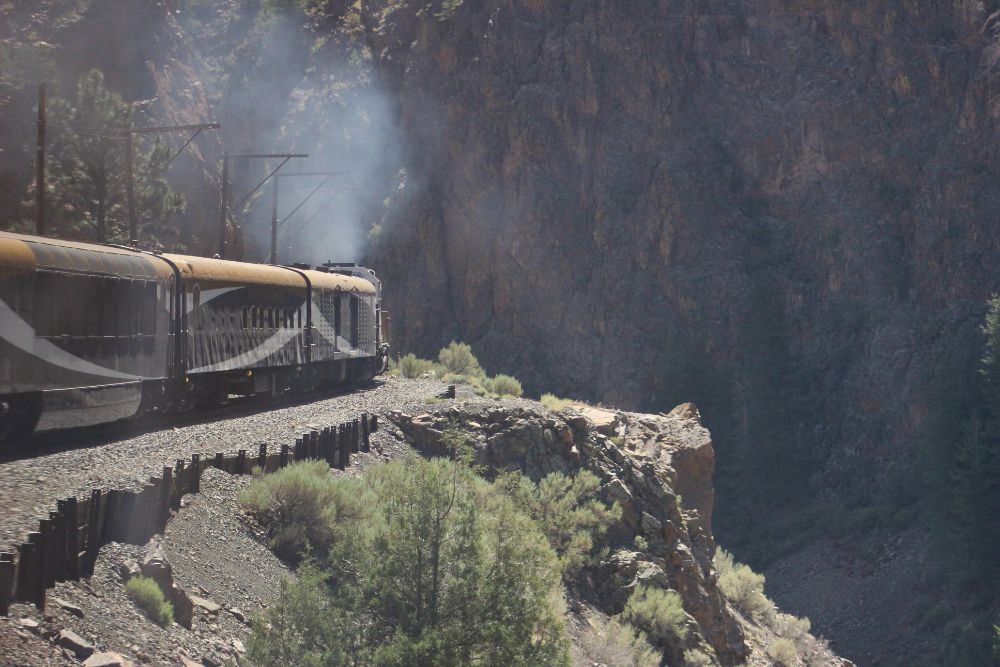
Canyon Spirit operates under the Armstrong Collective, a newly formed parent organization that oversees the renowned Rocky Mountaineer rail service. Rocky Mountaineer introduced Canyon Spirit, its rebranded U.S. product, last year, which also features an extended route to Salt Lake City.
Providing an extraordinary rail service, Canyon Spirit currently runs between Salt Lake City and Denver, offering both two- and three-day journeys in either direction that can be booked as rail-only, inclusive of accommodations, or as part of a full land package.
How Canyon Spirit Differs from Rocky Mountaineer
Canyon Spirit stands apart from Rocky Mountaineer, with several notable distinctions in their offerings. Firstly, the brand operates in a different geographical zone, resulting in varied scenery. Moreover, Canyon Spirit enjoys a longer seasonal operation, running from April to November (in contrast to Rocky Mountaineer’s April to October).
The train cars of Canyon Spirit have their unique characteristics. Due to the tunnels on the Rockies to the Red Rocks route, Canyon Spirit’s trains do not feature the bi-level cars that Rocky Mountaineer utilizes, which means they lack dining cars and glass dome observation cars. Additionally, the exterior design aligns with the brand’s logo and color palette.
The tiered service options are also distinct. On Rocky Mountaineer, travelers select between SilverLeaf and GoldLeaf services, whereas, on Canyon Spirit, they choose between Signature and Premier levels.
What to Expect from the Canyon Spirit Experience?

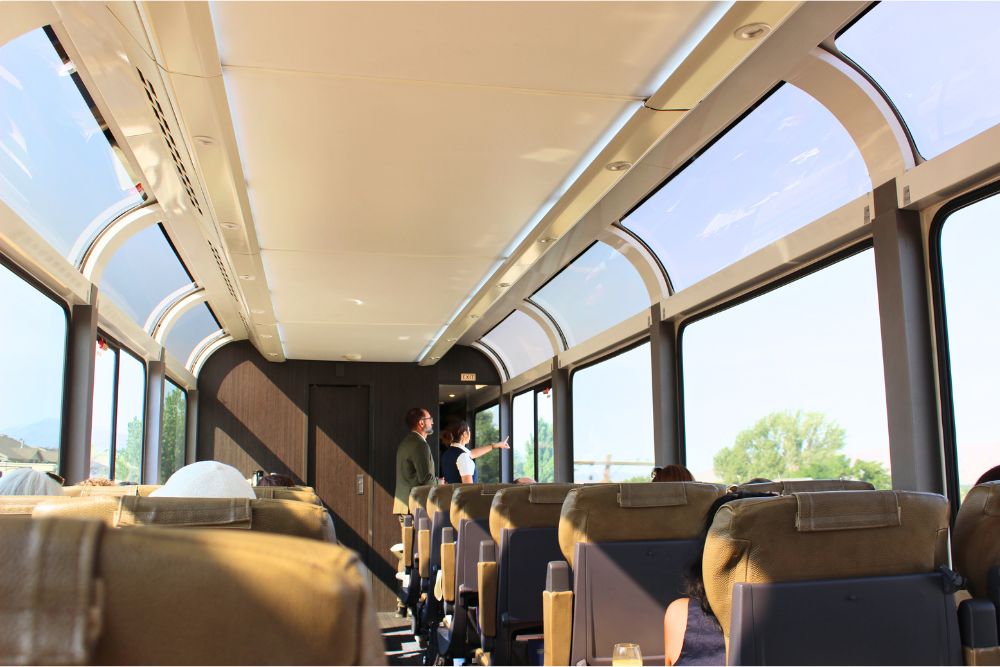
Patrons can look forward to a comfortable and premium journey on Canyon Spirit, with travel durations between five to eight hours a day. The expansive glass-domed coaches deliver unobstructed panoramas of the red rock canyons, flowing rivers, and arid landscapes, complemented by engaging hosts and knowledgeable guides who share anecdotes and insights throughout the trip. Service is attentive and personalized, with locally inspired dishes and drinks served at guests’ seats. (For a comprehensive view, refer to TMR’s detailed review on the Canyon Spirit experience.)
The railcars accommodate a maximum of 56 passengers. They can be adjusted based on demand, and it’s feasible to reserve an entire railcar for large group bookings.
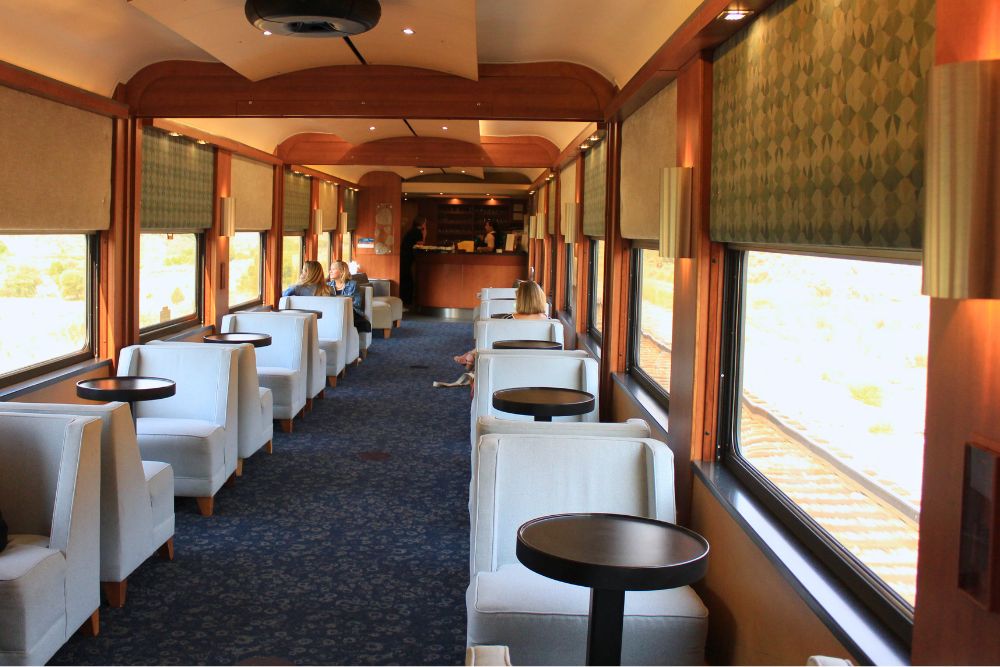
Individuals who purchase Premier tickets will gain entry to a lounge car (depicted above). Canyon Spirit operates two lounge cars; however, guests will only find out their assigned lounge upon departure. Both lounge cars provide equivalent service but differ only in their interior aesthetics.
Who Is the Ideal Canyon Spirit Traveler?
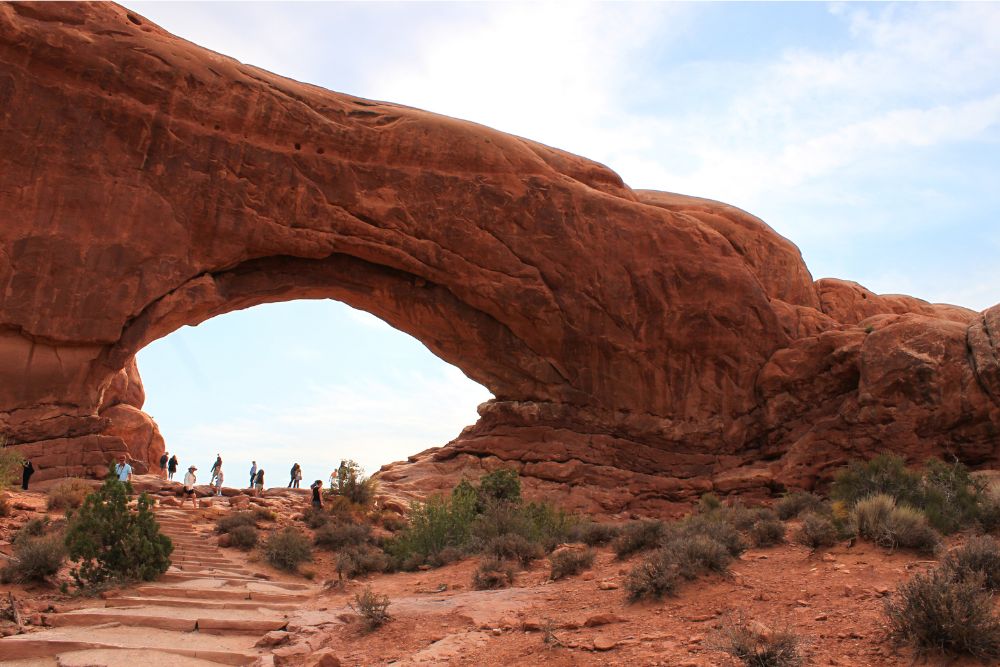
Canyon Spirit offers a high-end adventure right from the comfort of a railcar. The exceptional service and unrivaled access to remote, picturesque areas of the Southwest makes the Rockies to the Red Rocks route an attractive choice for clients who yearn for nature and the thrill of exploration while enjoying a touch of luxury.
The Canyon Spirit experience is low-impact and laid-back. Hosts captivate guests with engaging storytelling and informative insights, enriching their understanding of the regions traversed, including geological information. Although five hours may seem lengthy, the time passes swiftly.
Similar to Rocky Mountaineer, Canyon Spirit targets a clientele that seeks upper-premium to luxury experiences, which is reflected in the pricing structure. The Premier upgrade is a worthy investment for the lounge car access alone.
Also important to keep in mind is the trip’s length. With only three days of rail travel, it’s an excellent choice for clients with limited vacation time looking for swift domestic escapes. Travel advisors can additionally suggest pairing a Canyon Spirit experience with longer stays in either Denver or Salt Lake City.
However, Canyon Spirit is not a highly active experience. Passengers will spend considerable time seated, with minimal chances for physical activity. While this is ideal for travelers with mobility constraints, clients should be mindful of the time spent in their seats daily.
Wi-Fi is not offered on the train, and certain portions of the route traverse areas with no cell coverage. In various respects, this renders the rail trip an excellent “unplugged” getaway; however, for those dependent on their devices, this could pose a challenge.
Key Booking Tips
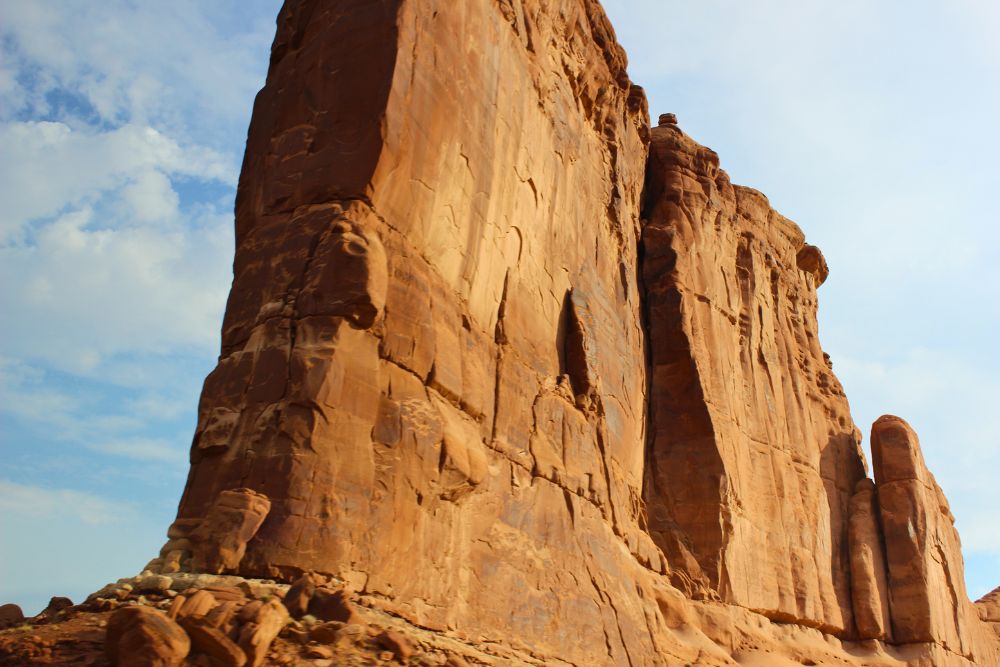
All Canyon Spirit packages (including rail-only options) are eligible for commissions, excluding national park fees, resort charges, and gratuities for onboard hosts. Armstrong Collective partners with all major consortia and host agencies across North America that define commission percentages. Armstrong Collective also maintains a dedicated Agent Portal to offer support and resources, including their Canyon Spirit TRACKS training program.
The Rockies to the Red Rocks itineraries allow time for guests to explore Moab and Glenwood Springs. Canyon Spirit provides an array of optional tours and activities that can be booked alongside the railway journey, enabling guests to experience the stunning scenery up close. These adventures are managed by trusted tour partners and may encompass sightseeing transfers, national park excursions, off-road adventures, and more.
Fonte: Travel Market Report
