


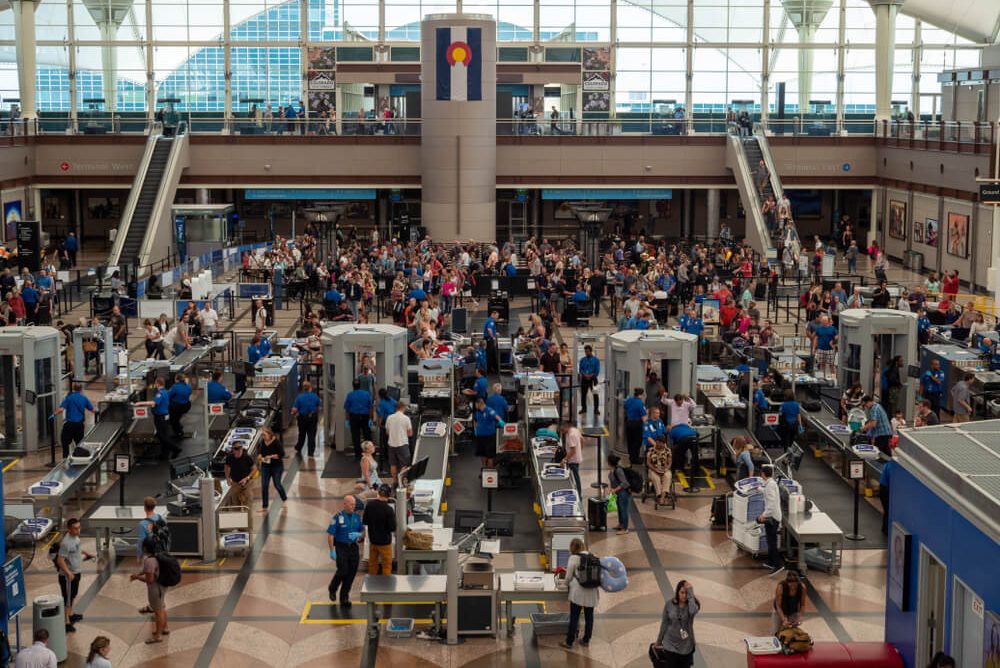
With the recent 43-day government closing from last year still fresh in memory, the U.S. travel sector is now confronting yet another crisis as funding for the U.S. Department of Homeland Security (DHS) expired over the weekend.
The DHS, which encompasses the Transportation Security Administration (TSA), has now become the only government entity without funding after being omitted from the most recent comprehensive funding legislation totaling $1.2 trillion, which was approved on Feb. 3. As of now, there is no timeline for when financial support will resume or when TSA personnel will receive their salaries; Congress is currently in a scheduled recess and is anticipated to reconvene no earlier than Feb. 23.
Though not as catastrophic as last year’s shutdown that affected the Department of Transportation (DOT) and the FAA, this recent partial closure could pose serious challenges for the travel industry.
U.S. Travel, Airlines for America, and the American Hotel & Lodging Association (AHLA) released a joint communiqué over the weekend, cautioning that this ongoing stalemate could influence one of the busiest travel periods of the year: spring break.
According to the groups, a shutdown raises the likelihood of unforeseen absences and call-ins among TSA employees, which may “ultimately result in increased wait times or missed and delayed flights.”
The industry also suggests that there could be enduring harm to the entire travel framework—harm that the U.S. travel sector cannot afford with both the 2026 World Cup and America’s 250th anniversary occurring this summer.
“The nation should concentrate on highlighting the country on a global platform and optimizing the multi-billion-dollar economic prospects these occasions offer. A break in TSA funding will greatly jeopardize those initiatives,” the organizations stated.
Status of TSA Checkpoints
The TSA reports that airport checkpoints continue to function and are operational—95% of TSA personnel are classified as “essential,” meaning they are legally obligated to show up for work even without receiving a salary.
Although the workforce is anticipated to maintain stability in the short term, Ha Nguyen McNeill, a TSA senior executive, informed a House subcommittee earlier this month that last year’s government shutdown contributed to a 25% increase in officers departing the job. Given that the workforce is still recovering from that prior interruption, another period without pay is likely to exacerbate that attrition rate.
Certain airports have already begun cautioning travelers regarding possible repercussions. Hartsfield-Jackson International Airport (ATL) in Atlanta is urging passengers to arrive at least three hours in advance for domestic flights and four hours for international trips. Los Angeles International (LAX) and John F. Kennedy International (JFK) in New York are similarly warning travelers of extended processing times in their customs areas.
Applications for Global Entry and PreCheck
Both TSA PreCheck and Global Entry applications remain available, but the experience varies for each program on the ground.
As TSA PreCheck is primarily funded by fees and managed by third-party contractors, enrollment centers are still operational, and appointments are occurring as planned.
Global Entry presents a different scenario; it is overseen by Customs and Border Protection (CBP) officials—many of whom are currently working without compensation—in-person interviews at some enrollment locations have been postponed or canceled. Travelers who are currently in the application process are advised to take advantage of the “Enrollment on Arrival” option when returning from international travels, as those booths continue to be manned by essential staff despite the funding deficit.
Fonte: Travel Market Report