


The United States has tightened the requirements for ESTA selfies, indicating enhanced identity verification in anticipation of potential biometric updates and new regulations anticipated by mid-2026.
Individuals seeking a U.S. travel authorization might observe a minor yet significant alteration. The ESTA application now demands more scrutiny with the selfie you submit, reflecting the increasingly stringent identity assessments prior to the introduction of broader changes.
Here’s what is altering and why it’s crucial if you intend to travel to the United States shortly.
What is ESTA?
ESTA, known as the Electronic System for Travel Authorization, enables travelers from countries within the Visa Waiver Program to enter the United States for business or leisure without needing a traditional visa.
Typically, it is valid for brief visits lasting up to 90 days. The application process is conducted online, is swift, and utilized by millions each year.
Nevertheless, the system is adapting as the U.S. seeks to enhance identity validation and combat fraud.
Enhanced Role of Selfie Upload
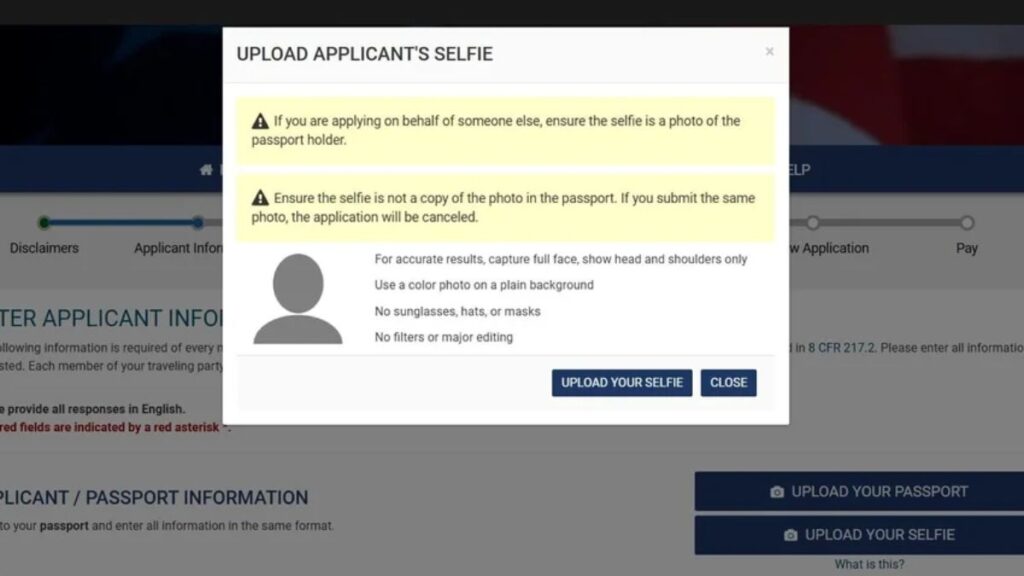
Starting April 1, the ESTA platform now regards the selfie upload with greater seriousness than in the past. Applicants encounter a pop-up with explicit guidelines on capturing the photo. The requirements include:
- Light-colored, plain background
- Avoiding shadows or patterns
- Neutral facial expression
- Eyes open and clearly visible
- Full face should be directed at the camera
- A new photograph distinct from the passport image
The selfie is no longer considered a supplementary image; it has become a crucial element of identity authentication.
Second Step for Correcting Inadequate Photos
Should the selfie fail to adhere to the requirements, the system presents an additional window detailing the necessary corrections. Applicants might be prompted to:
- Clearly display head and shoulders
- Remove glasses or any face-covering accessories
- Steer clear of filters or altered images
- Use uniform lighting
- Submit a clearer photograph
Instead of merely rejecting the photo, the portal now assists users in uploading an acceptable selfie.
Nevertheless, applicants must ensure the image complies with the guidelines. Substandard photos may result in delays or even application denial.
Reasoning Behind the US Changes
The stricter selfie guidelines correspond with discussions held by U.S. Customs and Border Protection in late 2025. Authorities have noted:
- Low-resolution images are being uploaded to the site.
- Challenges in matching faces to passport images.
- Fraudulent attempts to sidestep identity verification.
The U.S. has also emphasized the advantages offered by its mobile app, which facilitates live facial capture and enhanced biometric assessments.
The updated guidelines seem to be a move toward aligning the web process with the mobile app’s functionality.
Potential ESTA Modifications Under Consideration
Other prospective updates related to ESTA remain under evaluation and are yet to be implemented. These might encompass:
- Revealing social media accounts from the last five years
- Further personal or familial details
- Expanded biometric assessments
- Increased utilization of the mobile application
Based on prior schedules, any significant new prerequisites are not expected to commence before mid-2026.
Increment in ESTA Fee
In addition to these updates, the fee for ESTA applications has been modified. Effective January 2026, travelers utilizing the Visa Waiver Program will need to pay $40.27, a slight increase from the former $40 charge.
This fee adjustment mirrors a regular inflation modification carried out by U.S. Customs and Border Protection (CBP).
| Component | Previous Fee | New Fee (2026) | Change |
|---|---|---|---|
| Tourism Promotion Fund | $17 | $17 | No change |
| Program Component | $13 | $13 | No change |
| System Management (inflation-adjusted) | $10 | $10.27 | +$0.27 |
| Total | $40 | $40.27 | +0.27 |
Importance for Travelers Planning Trips in 2026
Although the update may seem minor, the selfie requirement could influence the efficiency with which an application is processed.
This is particularly pertinent as the demand for international travel is expected to increase in anticipation of significant global events, such as the 2026 FIFA World Cup, which is projected to attract millions to North America.
Applicants for ESTA should now approach the photo submission step with caution to prevent delays.
Fonte: Travelo Biz
